Automation in Warehousing: A Slow‑But‑Steady Revolution — and What Engineers Can Learn From It
Here’s a major trend emerging in warehouse automation today: automation is accelerating, but not in the flash‑cut way the public imagines. It’s slow, incremental, engineering‑intensive, and deeply reliant on solving hundreds of small mechanical and programming challenges along the way.
This article is written for design engineers, maintenance engineers, automation leads, and robot integrators who want to understand where automation is going, in addition to what engineering solutions are now available to make that progress faster, cleaner, and more reliable.
Engineers in automation today are navigating three key realities:
A) Automation is progressing, but slowly and steadily, not explosively.
Adding robots to a warehouse is not as easy as dropping in software or plugging in hardware. Each incremental improvement requires mechanical design refinements, careful cable routing, testing cycles, safety considerations, and human‑robot workflow planning.
B) Change requires significant engineering labour, often to solve “small” problems that are anything but small.
Minor motion variations, unpredictable loads, unusual packaging shapes, and contamination constraints all compound into complex engineering work.
C) Humans are still essential and will be for several years.
Even highly advanced warehouses still depend on people for tasks robots cannot yet reliably handle, such as gripping curved or fragile objects, interpreting ambiguous visuals, or handling exceptions.
But all signs point forward: the next few years will bring measurable leaps and engineers will be the ones enabling them.
This article highlights three specific design challenges you may already be facing in your automation projects, and the igus solutions engineered to address them.
A Recent Example: Ocado’s Warehouse Automation Journey
If you haven’t already read the reporting on Ocado’s automation progress, here’s the distilled takeaway:
- Ocado has automated around 15% of its warehouse work, handling hundreds of thousands of pick‑and-place operations per week.
- This milestone took years of engineering development, involving over a hundred engineers.
- The company aims to automate up to 70% of warehouse tasks within a few years.
- But in the meantime, humans remain essential—especially for tasks that robots still struggle with, such as gripping curved bottles (wine being the famous example) (Morris, 2024).
- The core insight:
Warehouse automation is absolutely the future—but it demands more than straightforward programming. It is complex, multidisciplinary engineering work. And it is coming.

Three Automation Challenges You’re Likely Facing (and igus Solutions That Help)
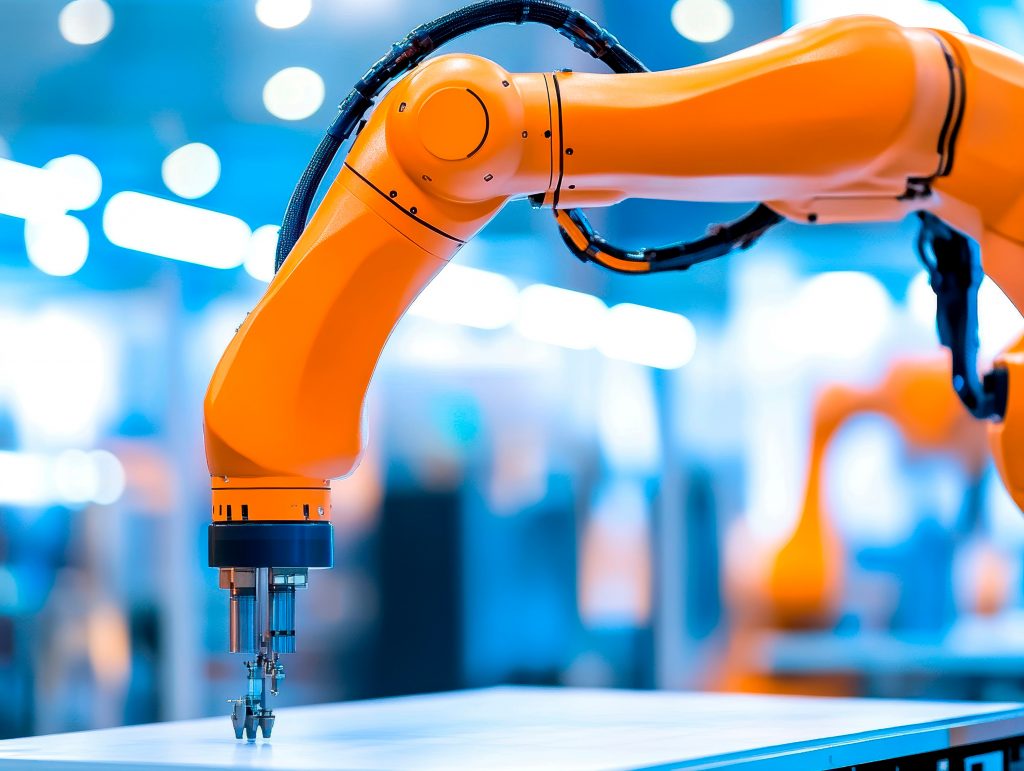
1. Downtime Caused by Cable Failure in 6‑Axis Robots
The challenge:
6‑axis robots perform complex, simultaneous rotations. Without proper cable guidance, torsion forces quickly destroy cables—leading to unplanned downtime, maintenance costs, and occasionally catastrophic failures.
igus solution:
- triflex® R multi-axis e-chain systems
- Robot-ready dresspacks
- chainflex® CFROBOT torsion-rated cables
These solutions:
- Absorb torsion forces rather than transferring them into the cable core
- Prevent cable loops from snagging on tooling or packaging
- Drastically extend service life, and
- Ensure consistent robot repeatability by stabilizing the dress window
For any robot integrator building a work cell meant to run 20,000+ hours, cable reliability isn’t optional—it’s foundational.
2. Preventing Contamination in Food, Beverage, and Clean Production Lines
The challenge:
Many production lines must meet strict hygiene requirements. Traditional metal bearings and linear slides require lubrication—introducing contamination risks in environments like food packaging, pharmaceuticals, or clean assembly.
igus solution:
These polymer components:
- Run completely dry
- Resist corrosion and chemical washdown
- Withstand continuous motion in wet, dusty, or particulate-heavy areas
For automation engineers working in sensitive environments, dry‑running plastic bearings eliminate one of the major contamination vectors.
3. Reducing the Burden and Cost of Maintenance
The challenge:
Maintenance is expensive—not just the labour, but the downtime. And incorrect lubrication is statistically one of the most common reasons for equipment failure.
igus solution:
- Dry-running iglide bearings with solid lubricants embedded throughout the material
These engineered polymers:
- Never require greasing
- Run quietly with low friction
- Maintain predictable service life
- And dramatically reduce maintenance intervals
In a high-cycle automation environment, removing lubrication from the equation simplifies workflows and reduces risk.
Conclusion: Automation Is Coming Fast—But the Wins Come From Smarter Design
Warehouse automation is advancing. Companies like Ocado are proving that large-scale robotic fulfillment is feasible—but only with years of engineering effort, careful iteration, and the right mechanical components.
For engineers in the field, the message is clear:
Automation success is built on reliability, cleanliness, and maintainability.
igus® Canada provides the motion systems—dresspacks, cables, linear guides, and tribopolymer bearings—that help engineers push automation forward with confidence and fewer points of failure.
If you’d like deeper technical insights, application examples, or sample components, the igus Canada team is here to support your next automation breakthrough.
Reference:
Morris, Ben. (2024, April 22). How robots are taking over warehouse work. BBC. https://www.bbc.com/news/business-68639533