How to Implement Industrial Automation Without High Upfront Costs
By Shizu Yamaguchi
Introduction: The Cost Myth in Industrial Automation
The notion that industrial automation demands prohibitive upfront capital is deeply embedded in manufacturing culture. For decades, automation projects were synonymous with large-scale, bespoke installations—costing hundreds of thousands of dollars and requiring months of commissioning.
However, that model no longer reflects the current state of industrial technology. Advances in modular hardware, standardized communication protocols, and pre-configured ecosystems have shifted automation from a capital-heavy investment to a scalable engineering decision. For Canadian manufacturers facing labour constraints and productivity pressures, the question is no longer whether automation is affordable, but rather how to implement it intelligently.
Why Traditional Automation Became Expensive
Historically, automation projects accumulated cost due to three structural factors:
- Custom Engineering
Systems were designed from first principles for each application. Mechanical, electrical, and controls engineering efforts were largely non-reusable.
- Vendor Fragmentation
Integrating components from multiple vendors required extensive compatibility testing, custom interfaces, and middleware development.
- Long Commissioning Cycles
Debugging PLC logic, tuning control loops, and validating safety systems were time-intensive processes conducted on-site.
This resulted in high non-recurring engineering (NRE) costs. Moreover, these costs were largely independent of system scale—making smaller automation projects disproportionately expensive.
What Typically Drives Automation Costs
To effectively reduce upfront investment, we must understand where costs come from.
| Category of Automation Costs | Introductory Note | Typical Cost Share | Key Considerations |
| Hardware Costs | Contrary to popular belief, hardware is often not the main cost. Components such as PLCs, sensors, actuators, and HMIs have seen significant cost reductions due to global standardization. | 50-55% | • Over-specification inflates cost unnecessarily • Proprietary hardware ecosystems increase long-term dependency |
| Integration Costs | System integration remains one of the largest contributors to project cost. Integration costs escalate with system complexity and lack of standardization. | 40-45% | • Mechanical mounting and alignment • Electrical panel design and wiring • Network configuration (EtherNet/IP, PROFINET, Modbus TCP) • Safety system integration (e-stop circuits, light curtains) |
| Programming Costs | Controls programming and system logic development represent another significant expense. Custom code, especially when poorly documented, creates long-term maintenance liabilities. | 20–30% | • PLC ladder logic or structured text • HMI/SCADA configuration • Motion control tuning • Error handling and diagnostics |
Common Mistakes That Inflate Cost
Even with modern tools, cost overruns remain common due to avoidable engineering decisions:
- Over-engineering the solution
Designing for edge cases instead of typical operating conditions.
- Ignoring standardization
Using inconsistent components and architectures across projects.
- Late-stage requirement changes
Modifying scope after design freeze significantly increases integration effort.
- Vendor lock-in without evaluation
Selecting proprietary systems without considering lifecycle cost.
- Underestimating commissioning time
Inadequate testing resources extend deployment timelines.
Actionable Steps Towards Cost-Effective Automation
A structured approach can significantly reduce both upfront cost and project risk:
- Define the Minimum Viable Automation (MVA)
Focus on automating the highest-impact bottleneck rather than the entire process.
- Standardize Architecture Early
Select a consistent PLC platform, communication protocol, and I/O strategy.
- Use Modular Design Principles
Break systems into reusable units with defined interfaces.
- Leverage Pre-built Libraries
Use vendor-provided function blocks and templates to reduce programming effort.
- Simulate Before Deployment
Use digital twins or offline simulation tools to validate logic and reduce commissioning time.
- Plan for Scalability
Ensure the system can expand without requiring complete redesign.
- Document Thoroughly
Clear schematics, code comments, and system documentation reduce long-term operational cost.
Reducing Upfront Cost
Reducing cost does not require sacrificing capability. It requires engineering discipline and strategic architecture.
Modular Systems
Modular automation replaces monolithic design with standardized building blocks.
Key characteristics:
• Pre-engineered sub-systems (e.g., conveyor modules, pick-and-place units)
• Standard mechanical interfaces
• Plug-and-play electrical connections
Benefits:
• Reduced integration effort
• Faster deployment
• Easier scaling and reconfiguration
Example: Instead of designing a custom material handling system, use a modular conveyor platform with standard drive and control packages.
Pre-integrated Ecosystems
Leading automation vendors now offer tightly integrated hardware and software ecosystems.
Examples include:
• PLC + HMI + I/O packages with unified programming environments
• Robotics platforms with built-in vision and safety features
• Pre-configured communication stacks
Benefits:
• Eliminates compatibility issues
• Reduces programming overhead
• Accelerates commissioning
Engineers should prioritize ecosystems where components share a common development environment and communication protocol.
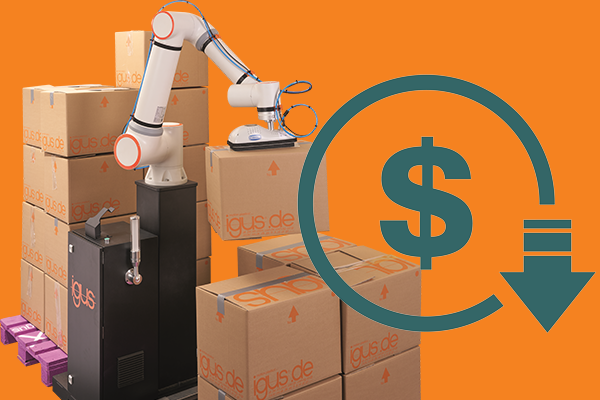
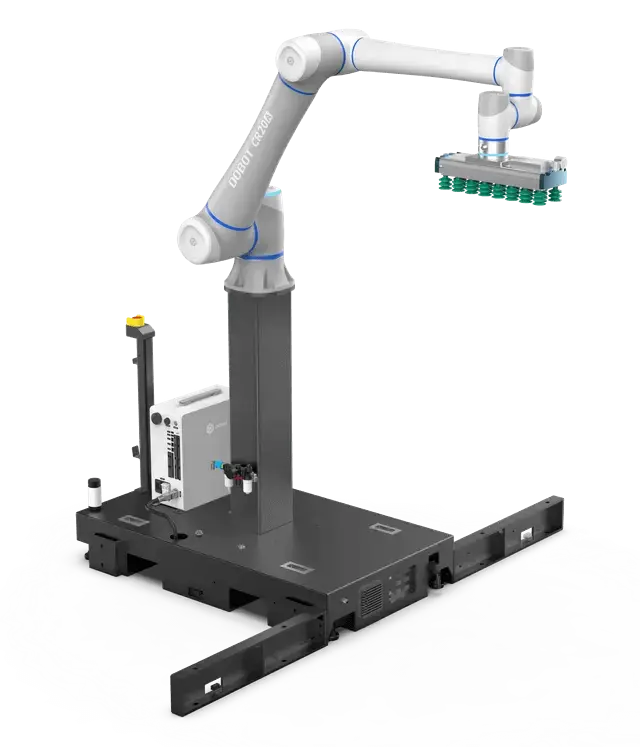
An example of a pre-integrated automated and standard application includes palletizing systems, offered by RBTX®.
More Realistic Budget Scenarios
~$10,000 USD
Feasible scope:
• Single-station automation + end-of-arm tooling
• Simple pneumatic or electric actuation
Example applications:
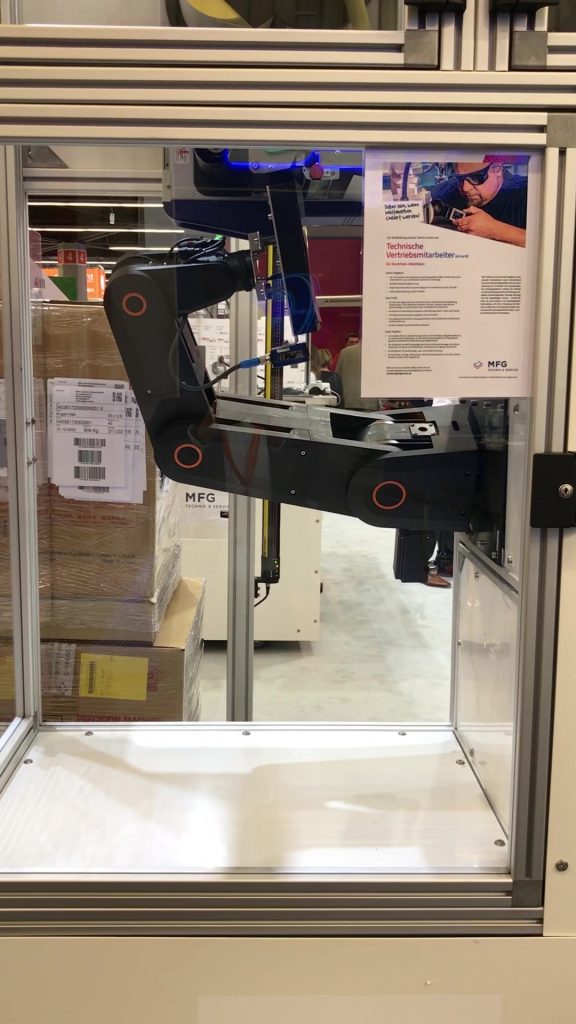
• Automated pick-and-place applications
• Basic inspection with sensors
• Semi-automated assembly assist
Constraints:
• Minimal customization
• Limited scalability without redesign
~$25,000 USD
Feasible scope:
• Integration of conveyors and sensors
• Mid-tier PLC with network capability
• Basic robotics (e.g., collaborative robot for light tasks)
Example applications:
• Inline quality checks
• Small packaging cells
• Machine tending cells
Constraints:
• Moderate integration complexity
• Requires careful system architecture to avoid scope creep
~$70,000 USD
Feasible scope:
• Fully integrated automation cell
• Robotics with vision systems
• PLC with distributed I/O
• Safety-rated controls
Example applications:
• End-of-line packaging
• Precision assembly processes
• Automated inspection
• Press brake applications
Constraints:
• Requires disciplined project management
• ROI justification becomes critical
Rethinking Automation Investment
The idea that automation is inherently expensive is outdated. In reality, cost inefficiencies often stem from design philosophy rather than technology limitations.
By embracing modular systems, leveraging pre-integrated ecosystems, and applying disciplined engineering practices, manufacturers can deploy effective automation solutions within modest budgets. The result is not only reduced upfront investment but also improved agility and maintainability.
In practical terms, this shift also alters where engineers begin their search. Instead of defaulting to bespoke system design or opaque vendor quotations, there is increasing merit in starting with transparent, catalogue-driven environments that reflect the modular reality of modern automation.
Marketplaces such as RBTX, which aggregate pre-engineered robotic components, subsystems, and integration-ready solutions with visible pricing, offer a grounded point of entry. For firms seeking to explore robotics without committing prematurely to costly custom engineering, such platforms provide both price discovery and architectural reference—two disciplines that, taken seriously, tend to reduce costs as much as any technological advance.