What does your crane application need: busbar or energy chain?
Originally published by igus.co.uk
Busbar trunking or energy chain? The performance and reliability of a crane are directly dependent on how power reaches the system. These systems are large and expensive, so ensuring you choose the correct solution could save you thousands of dollars. There are various power supply options available, and each comes with specific requirements and considerations. Selecting the best system can be challenging, but because it is such a critical decision, it’s important to carefully weigh the advantages and disadvantages of each option.
Here, we look at two possible solutions: busbar systems and energy chains.
What Is a Busbar?
Busbars have historically been a popular power supply solution for cranes, delivering continuous electricity to the system. However, busbar systems do have some drawbacks. One of the main challenges is maintenance. Busbars require frequent inspections, which can result in operational downtime. This is not only inconvenient but can also be costly.
Busbars are also limited in the types of energy and services they can support. In a busbar system, each conductor requires its own conductor bar and collector. If additional conductors are needed, extra conductor bars must be installed on the hanger brackets. Space restrictions can often make this difficult, limiting the scalability and flexibility of busbar systems.
Another potential drawback is the addition of hoses or other cable types. These require a separate system, which is an important consideration when looking at intelligent plastics, Industry 4.0 initiatives, and connected systems. Companies must determine whether accommodating additional external cables is practical for their application.
Busbars can also present challenges due to the exposure of live conductors to the surrounding environment. This can raise health and safety concerns, particularly in hazardous or explosive environments. Dust, debris, and corrosive conditions can significantly affect system performance. Corrosion is especially likely in applications located near seawater and can cause serious damage to the system over time.
What Is an Energy Chain?
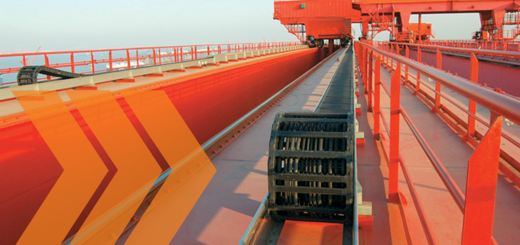
Energy chains are a straightforward and versatile solution. igus® energy chains are constructed from parallel side links connected by crossbars along the top and bottom of the chain. Different designs and materials are available to suit a wide range of motion requirements and environmental conditions. Unlike steel systems, plastic energy chains are designed to resist abrasion and corrosion.
igus® energy chains are lighter than steel alternatives and are 100% maintenance-free. e-chains® can carry multiple types of cables and hoses within a single system, including power, data, fiber optics, media, and hydraulic lines. Our chainflex® cables feature jacketed multi-conductor designs specifically engineered for continuous flexing applications. We are so confident in our products that we offer a four-year guarantee on our e-chains® and cables.
With e-chain® systems, cable replacement and upgrades are also simple. Cables are secured with strain relief clamps installed at each end of the chain. If a cable needs to be replaced or upgraded, the existing cable can be released and used to pull the new cable into position.
The tribologically optimized polymers used to manufacture e-chains® enable them to remain stable even when subjected to high loads, elevated temperatures, and harsh weather conditions. This is one of the key reasons energy chains are often better suited to crane applications than busbar systems.
So, Which Is Best: Busbar or Energy Chain?
The answer depends on the specific requirements of your application. However, when flexibility, maintenance reduction, corrosion resistance, and the ability to integrate multiple cable types are priorities, energy chain systems offer significant advantages.
Want to learn more about crane manufacturing? Visit the igus® crane industry page.