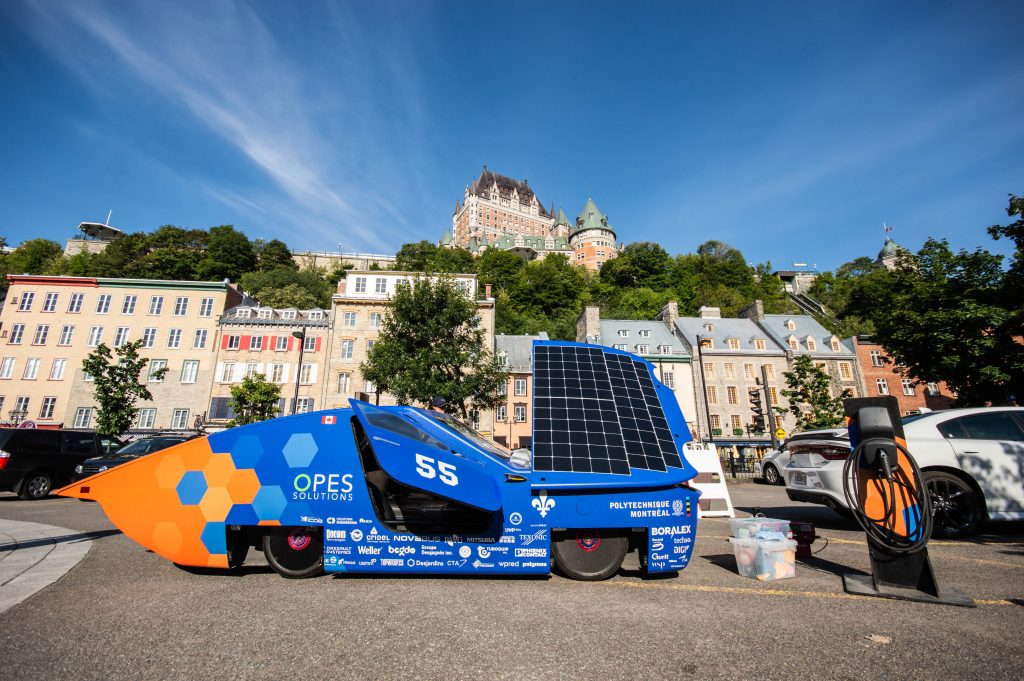
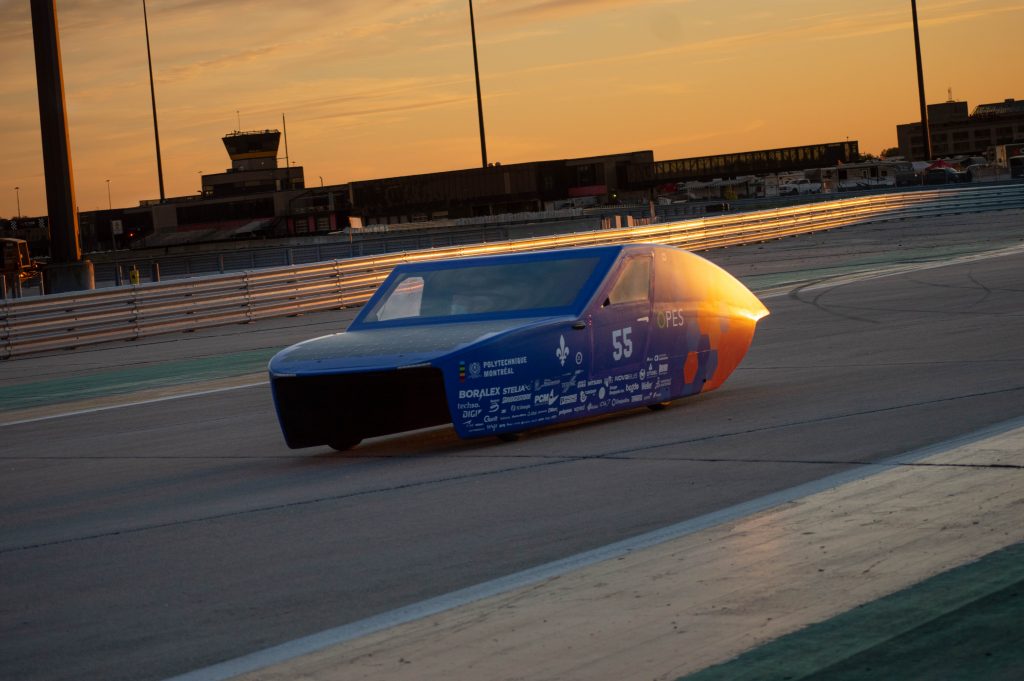
Every 2 years, a team of about 100 engineering students from Polytechnique Montréal come together for a challenge that blends creativity, technical skill, and sustainability: building a solar-powered car. Known as the Esteban Project, this initiative has been running since 1998, has produced 11 vehicles, and is currently on its 12th prototype. Each new car builds on the lessons of previous designs, pushing the boundaries of efficiency and performance.
Check out the Esteban solar car factsheet below to see how much the current version (Esteban 11) and the previous version stack up:
A Journey Beyond Engineering
The Esteban Project is an experience of a lifetime. Students spend months designing, manufacturing, and testing their vehicle, then take it on cross-country competitions across the U.S. Along the way, they share meals, hike, and bond with peers from other universities. It’s a rare opportunity to apply classroom knowledge to real-world challenges while building friendships and professional networks.
Not only has the experience been beneficial for the students themselves, but their work has been award-winning. Most recently, Esteban solar cars have won:
The 2024 Electrek Formula Sun Grand Prix
The 2024 Electrek American Solar Challenge
And the 2025 Electrek Formula Sun Grand Prix with Esteban 11
What makes this latest achievement even more remarkable? Despite having the capability to recharge via a plug and a backup battery, the car completed the 2025 Grand Prix powered exclusively by solar energy.
Where igus Comes In
So, how does igus fit into this story? We partnered with the Esteban team to supply high-performance polymer components, parts that deliver unique advantages for solar car design. Our dry-running, maintenance-free bearings and motion systems reduce weight, minimize friction, and eliminate the need for lubrication. These benefits translate into greater efficiency and reliability, which are critical for a vehicle powered by the sun.
For igus, this collaboration wasn’t just about parts, but it was about supporting innovation and sustainability. Our mission to achieve CO₂-neutral operations by 2030 aligns perfectly with Esteban’s goal of promoting renewable energy and advancing electric mobility.
Why It Matters
Projects like Esteban demonstrate what’s possible when engineering meets imagination. They also highlight the importance of partnerships. By working with igus, the students gained access to cutting-edge components and technical support, making their ambitious vision a reality.
Want to Learn More or Get Involved?
Follow the Esteban team’s journey on Instagram for behind-the-scenes footage and race highlights. To explore how igus can help with your next project, whether it’s a solar car or a complex automation system, visit igus.ca or call 1-800-965-2496.
Edited with the assistance of AI tools to ensure clarity and flow.
CONTACT US Address 180 Bass Pro Mills Drive Vaughan, ON L4K 0G9 Hours Monday to Friday from 8 am – 5 pm Phone (800) 965-2496 Email caordersna@igus.net
Sign up for our newsletter to enjoy exclusive free offers on samples and other helpful materials. Stay updated on the latest igus products and services.