How Faster Robot Cycle Times Increase Cable Wear and Downtime
Introduction — The Push for Faster Throughput
Across Canadian manufacturing sectors—automotive, food processing, and advanced fabrication alike—pressure to increase throughput continues to intensify. Shorter takt times and higher overall equipment effectiveness (OEE) targets have driven robotic systems to operate at increasingly aggressive cycle speeds.
While much attention is given to servomotor tuning, path optimization, and controller responsiveness, a critical yet often under-engineered component bears the brunt of these performance gains: the robot’s cable system. The relationship between cycle time and cable durability is neither linear nor forgiving. As speeds climb, failure modes accelerate disproportionately, introducing reliability risks that directly impact uptime.
The Relationship Between Speed and Cable Stress
Acceleration and Deceleration Forces
In high-speed robotic applications, cable systems experience repeated inertial loading due to rapid acceleration and deceleration. Each motion cycle imposes tensile and compressive forces along the cable length, particularly at transition points such as wrist axes or dress packages.
Unlike static installations, dynamic cables must tolerate continuous mechanical strain. With increased cycle frequency, these forces compound:
- Higher acceleration rates increase peak tensile loads
- Rapid deceleration induces compressive buckling forces
- Repetitive stress cycles shorten fatigue life exponentially
This creates a classic fatigue scenario: the greater the stress amplitude and frequency, the faster the degradation.
Dynamic Loading
Dynamic loading is further intensified by multi-axis motion. Articulated robots introduce compound stresses—torsion, bending, and axial strain—often occurring simultaneously. At higher speeds, these loads become less predictable and more severe.
Cable jackets, conductors, and shielding layers all respond differently to these forces, leading to internal wear long before visible damage appears.
Why High-Speed Motion Exposes Weak Cable Routing
Uncontrolled Movement
Poor cable routing that may appear adequate at moderate speeds often fails under high-speed operation. Increased velocity amplifies even minor slack miscalculations or routing inefficiencies.
Common issues include:
- Excessive free length leading to whipping or oscillation
- Insufficient constraints at critical pivot points
- Inconsistent load distribution across bundled cables
At high speeds, cables behave less like passive components and more like dynamic mechanical elements requiring precise control.
Repetitive Flexing
Every robotic cycle introduces repeated bending at predictable locations. Without proper bend radius management, this flexing concentrates stress in localized regions.
High-speed operation exacerbates this by:
- Increasing the number of flex cycles per hour
- Intensifying strain at minimum bend radius points
- Accelerating insulation cracking and conductor breakage
Over time, this leads to premature failure even in high-quality cable assemblies.
Common High-Speed Failure Modes
Corkscrewing
Corkscrewing occurs when torsional forces accumulate along the cable due to improper routing or lack of rotational relief. The cable begins to twist along its axis, forming spirals that:
- Increase internal stress
- Restrict movement
- Lead to rapid mechanical breakdown
This is particularly common in dress packs attached to wrist axes without proper swivel mechanisms.
Premature Fatigue
Fatigue failure manifests internally first, often as conductor strand breakage. Symptoms include intermittent electrical faults before complete failure.
High-speed systems accelerate fatigue due to:
- Increased cycle counts
- Shorter recovery time between stress events
- Elevated thermal effects from continuous operation
Connector Damage
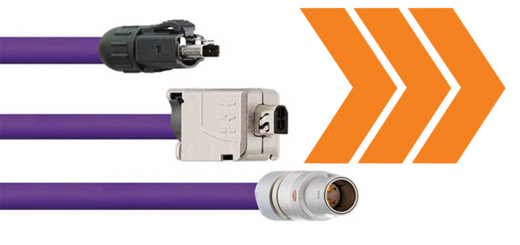
Connectors are frequent failure points in high-speed robotic systems. Inadequate strain relief or excessive cable motion can lead to:
- Pin misalignment
- Housing cracks
- Signal degradation or loss
Connector failures are especially problematic because they can mimic sensor or control issues, complicating diagnostics.
The Hidden Downtime Costs of Cable Failure
Lost Production
Cable failures typically result in immediate and unplanned stoppages. Unlike gradual component degradation, cable issues often present as sudden faults, halting production lines entirely.
For high-throughput operations, even minor downtime can translate into significant financial loss per hour.
Maintenance Interruptions
Replacing damaged cables in robotic systems is rarely trivial. Access constraints, routing complexity, and calibration requirements extend maintenance duration.
Additionally:
- Spare parts may not be readily available
- Maintenance personnel require specialized knowledge
- Recommissioning time adds to total downtime
Troubleshooting Time
Intermittent cable faults are notoriously difficult to diagnose. Engineers often spend hours isolating root causes, particularly when issues involve:
- Signal noise
- Sporadic disconnections
- Multi-axis interactions
This diagnostic uncertainty increases mean time to repair (MTTR) and reduces overall system reliability.
Engineering Considerations for High-Speed Robotics
Motion Control
Optimizing motion profiles can significantly reduce cable stress without sacrificing throughput. This includes:
- Smoothing acceleration and deceleration curves (jerk control)
- Avoiding unnecessary motion complexity
- Minimizing abrupt directional changes
Well-tuned motion reduces peak loads on both mechanical and electrical subsystems.
Cable Separation
Separating power, signal, and pneumatic lines reduces interference and mechanical interaction. Proper segregation:
- Minimizes abrasion between cables
- Reduces electromagnetic interference (EMI)
- Improves overall system organization and serviceability
Cable carriers or energy chains should be selected based on dynamic ratings, not static assumptions.
Bend Radius Management
Maintaining appropriate bend radius is fundamental to cable longevity. Engineering guidelines should ensure:
- Compliance with manufacturer-specified minimum bend radius
- Consistent bend radius throughout motion cycles
- Use of strain relief and support structures at termination points
Ignoring bend radius constraints is one of the most common causes of premature failure in high-speed systems.
Conclusion — Reliability Becomes More Critical as Cycle Times Shrink
As robotic systems continue to push the boundaries of speed and productivity, cable management must be treated as a primary engineering consideration rather than an afterthought. The gains achieved through faster cycle times can be quickly offset by increased wear, unplanned downtime, and maintenance overhead.
For engineers and manufacturing leaders, the mandate is clear: design for reliability at speed. This requires a holistic approach—combining motion optimization, robust cable routing, and adherence to mechanical constraints—to ensure that performance improvements do not come at the expense of system resilience.
In high-speed robotics, durability is not optional. It is a prerequisite for sustained operational success.
A Smarter Approach: Multi-Axis Cable Carriers
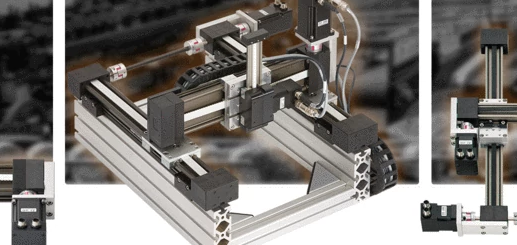
As robotic systems push the limits of speed and articulation, the shortcomings of conventional dress packs become more apparent. Engineered solutions such as triflex® multi-axis cable carriers address these challenges directly.
Key engineering advantages include:
- Torsion-free guidance reduces conductor fatigue, a leading cause of failure in six-axis robots
- Consistent bend radius control keeps cables within manufacturer limits during aggressive motion
- Enclosed routing minimizes abrasion and protects against external interference
- Integrated strain relief safeguards connection points, particularly in high-risk wrist applications