Types of Robot Movement
In the world of robotics, smooth and reliable motion is essential. A robot’s ability to move accurately and efficiently directly affects its performance across a wide range of applications and industries.
Understanding the different types of robot movement can help optimize performance, improve reliability, and ensure your automation systems operate effectively over long periods.
Common Types of Robot Movement
The type of movement used in a robotic application depends on several factors, including the robot’s design, level of complexity, and intended purpose. Below are some of the most common forms of robotic motion.
Linear Movement
Linear movement occurs when a robot travels in a straight line along one or more axes.
This type of motion is commonly found in Cartesian gantry robots, which operate on three linear axes (X, Y, and Z). Linear movement is ideal for applications that require accuracy and repeatability, such as:
- Pick-and-place operations
- CNC machining
- 3D printing
- Material handling
Rotary Movement
Rotary movement involves rotation around a fixed axis.
This type of motion is typically used in articulated robot arms, where rotating joints provide flexibility and an extended range of movement. Rotary motion is commonly used for:
- Welding
- Painting
- Assembly operations
- Machine tending
Cylindrical Movement
Cylindrical movement combines both linear and rotary motion.
In this configuration, a robot can move vertically along an axis while simultaneously rotating around it. This creates a motion pattern similar to a corkscrew and is well suited to:
- Packaging applications
- Material handling
- Loading and unloading tasks
- Assembly processes
Spherical Movement
Spherical movement allows a robot to operate within a spherical work envelope, reaching points throughout a three-dimensional space.
This type of movement is common in SCARA (Selective Compliance Articulated Robot Arm) robots designed for high-speed, high-precision tasks, including:
- Electronics assembly
- Inspection processes
- Small-part handling
- Precision manufacturing
Articulated Movement
Articulated robots use multiple rotary joints to achieve a high degree of freedom and flexibility.
This is one of the most versatile types of robot movement and is commonly found in robotic arms and humanoid robots. Articulated movement is ideal for complex applications such as:
- Automotive manufacturing
- Surgical procedures
- Assembly operations
- Advanced manufacturing processes
Why Protected Robot Movement Matters
Understanding the different types of robot movement is only part of the equation. Ensuring cables are properly guided and protected is equally important for maintaining performance and reliability.
Effective cable management helps:
- Reduce cable wear and failure
- Improve system reliability
- Minimize unexpected downtime
- Lower maintenance costs
- Extend equipment service life
At igus®, we develop practical, cost-effective solutions to address the challenges faced by automation users across a wide range of industries.
How igus® Can Help: The triflex® Range
Each type of robotic movement presents unique cable management challenges. Without proper cable guidance and protection, cables can become twisted, pinched, or damaged, resulting in unplanned downtime and increased maintenance costs.
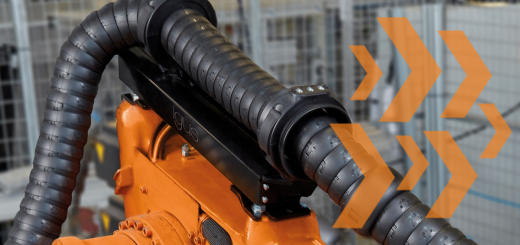
The igus® triflex® range is specifically designed to guide and protect cables in dynamic robotic applications. Capable of handling complex three-dimensional movements, triflex® energy chains help improve cable life while maintaining reliable operation.
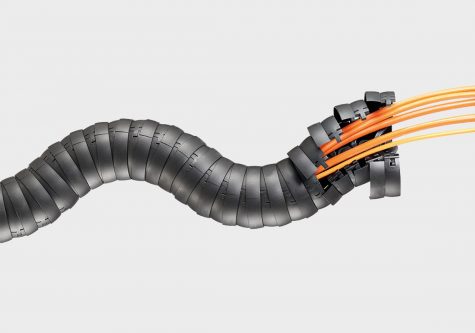
Key benefits of triflex® include:
- Designed for complex 3D robotic movements
- Suitable for articulated and multi-axis robots
- Flexible and durable construction
- Lubrication-free operation
- Reduced cable wear and failure
- Easy cable access for maintenance and replacement
Manufactured from high-performance plastics, triflex® energy chains are built to withstand demanding industrial environments while helping to maximize system reliability.
The modular design also maintains a defined minimum bend radius, reducing the risk of cable pinching, kinking, or breakage. This helps extend cable service life and minimize downtime.
Using our online configurators, customers can design a cable management solution tailored to their specific robotic application.
Simplifying Automation with the RBTX Platform
For businesses looking to introduce or expand automation, the RBTX platform provides a simple way to build a robotic solution tailored to specific requirements.
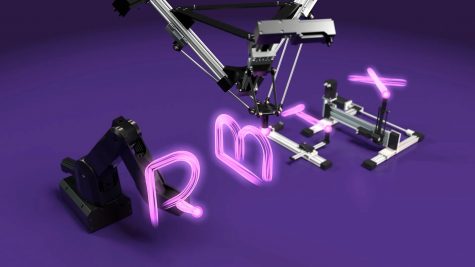
Created by igus®, RBTX is an online robotics marketplace that allows users to configure complete automation systems using compatible components from leading manufacturers, including:
The platform automatically suggests suitable components and helps ensure compatibility between selected products, reducing the complexity often associated with automation projects.
Once a robotic system has been configured, complementary solutions such as triflex® energy chains can help protect your investment and maximize system longevity.
If you’re unsure where to begin, igus® also offers a free consultation service to help kick-start your automation journey.
Conclusion
Understanding the different types of robot movement can help improve the performance, reliability, and efficiency of your automation systems.
With solutions such as triflex® energy chains and the RBTX robotics marketplace, igus® helps businesses optimize automation for long-term success.