Solving High-Torsion Cable Challenges in 6-Axis Robotics
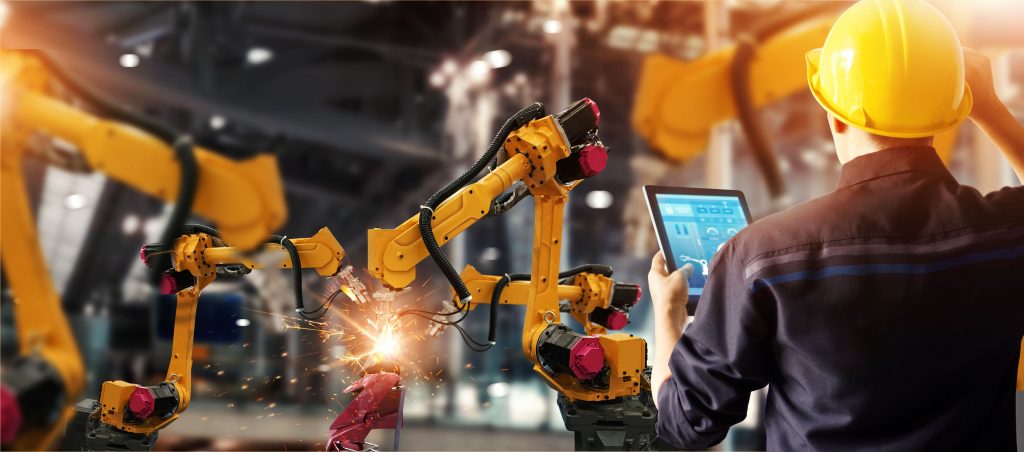
Design engineers specifying cables for 6-axis articulated robots must account for one of the most mechanically aggressive motion profiles in industrial automation: continuous torsion combined with multi-plane bending.

Unlike linear energy chain applications, robot dress packs—particularly at axis 5 and axis 6—subject cables to sustained torsional stress, often approaching ±360°/m depending on routing and joint geometry. When high-speed data transmission is also required, maintaining both mechanical durability and shielding integrity becomes a critical design constraint.
Failure to properly account for these conditions can lead to:
- Shield fatigue and increased transfer impedance
- Core deformation and conductor strand breakage
- Impedance variation and degraded Ethernet performance
- Unplanned downtime due to cable replacement
For high-duty robotic cells, cable reliability directly affects OEE, maintenance intervals, and lifecycle cost.
CFROBOT8-plus: Designed for Continuous Torsion
The CFROBOT8-plus from igus is engineered specifically for high-torsion robotic applications requiring shielded Ethernet communication.
Rather than adapting a standard flex cable, this design incorporates construction features intended to support continuous ±360°/m torsional movement while maintaining signal performance consistent with CAT7 transmission requirements.
Technical Characteristics
- Shielded, industrial Ethernet cable suitable for high-bandwidth applications
- Torsion-rated for continuous ±360° per metre
- Designed for 3D robotic motion (including axis 5/6 applications)
- Optimized lay lengths and conductor stranding to reduce internal shear stress
- Validated through laboratory torsion testing under dynamic load
For robotic integrators, this enables use in:
Industries: 3D printers, Aerial lifts and platforms, Agricultural technology, Automotive, Automation and Robotics, Construction machinery, Hydropower, Packaging, Cranes, Stage and Theater, Vending Machinery
In these environments, both EMC performance and mechanical endurance are required simultaneously.
Service Life Validation with the chainflex service life calculator
Cable specification for robotic systems should be data-driven rather than assumption-based. The chainflex service life calculator provides a predictive model based on empirical laboratory test data.
Engineers can input application-specific parameters such as:
- Torsion angle per metre
- Acceleration and cycle rate
- Bend radius (if applicable)
- Environmental conditions
The tool then estimates service life based on tested performance envelopes.
This predictive approach is derived from decades of controlled testing under repeatable torsional and bending conditions. For design engineers responsible for uptime guarantees or warranty exposure, this provides a defensible basis for cable selection.
Practical Considerations for 6-Axis Robot Design
When specifying cables for articulated robots, engineers should evaluate:
- Verified torsion rating (continuous vs. intermittent)
- Shield construction type and fatigue resistance
- Impedance stability under rotational load
- Minimum bend radius compatibility with dress pack routing
- Test validation methodology
Cables not explicitly designed for torsion often fail prematurely when deployed in axis-intensive applications, even if nominally “robot rated.”

Conclusion
High-torsion robotic applications require cable constructions engineered specifically for rotational stress and electromagnetic stability. The CFROBOT8-plus addresses this requirement by combining continuous torsion capability with shielded high-speed data transmission.
When paired with the chainflex service life calculator, engineers gain a measurable, test-based method for predicting longevity in demanding 6-axis robotic systems.
For automation environments where uptime, EMC reliability, and lifecycle cost matter, validated torsion-rated cable design is not optional—it is a fundamental design parameter.