The overlooked sustainability benefits hidden inside modern robotics
Adriana Glazer | 18. June 2021 (Edited by Shizu Yamaguchi)
For years, robots have been considered drivers of productivity and efficiency. Automation continues to be implemented in more and more environments. Integration of industrial robots allows complex, tiresome, and dangerous work to be automated and performed quickly. The tasks range from vacuum cleaning robots to bomb disposal.
Although companies are using robotics and automation with increasing frequency, they have so far infrequently made the leap to fully integrating complex robot systems. Machinery that appears to come from the domain of science fiction increase productivity and reduce costs, but has other major advantages that are often overlooked: sustainability and energy efficiency.
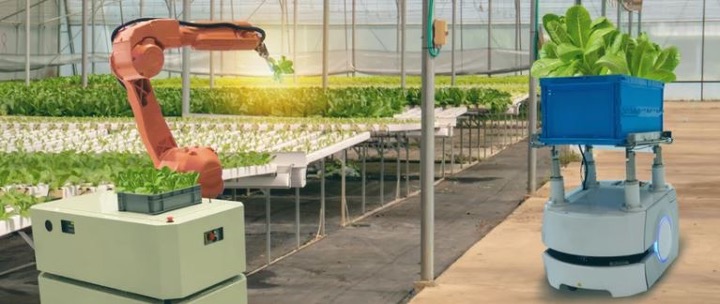
Sustainable production and robots: how do they fit together?
Reduce energy costs
A major incentive for automated manufacturing is energy cost reduction. Optimizing individual manufacturing tasks is one way to reduce energy costs. In addition, robots can work without breaks and can perform several tasks in a single step. Lastly, no lighting, heating or direct supervision is required. With all of the former variables in tow, significant energy cost savings result.
Minimize production waste and material consumption
Cutting-edge technologies rely on extremely high-precision movements. This precision minimizes errors and optimizes the planning of necessary production material. This in turn minimizes production rejects and excess material. In automotive production, for example, the amount of adhesive or paint required for an individual component can be calculated and programmed with exactitude.
Replacement parts with robots instead of large systems
Robots can be programmed in a wide variety of ways, making them much more flexible than static machines. Sticking with the example of automotive production, replacement parts continue to be needed years after a series has stopped being produced. In cases like these, the manufacturer can use a modular robot system to simply retrofit the production process. Large systems that require a lot of energy and space, as well as a large number of employees can be eliminated.
Taking part in recycling processes
Robots can help close the circuit that consists of production, sorting and recycling of used goods. Integrated vision systems allow them to detect individual components and disassemble them into recyclable parts.
Humans and machines: the strongest team
According to a study conducted by the Massachusetts Institute of Technology (MIT) in co-operation with BMW, mixed groups of robots and humans are about 85% more productive than teams made up only of robots or only of humans (Hollinger, 2016). As has been mentioned, robots can also perform a number of tiresome, repetitive, or even dangerous tasks, relieving stress on humans. This creates capacity for more productive tasks for employees.
Conclusion
This article set out to show how automation is moving beyond productivity alone and becoming a key driver of sustainability. Robotics now play an essential role in reducing energy use, minimizing waste, and supporting more efficient, responsible production practices.
At igus, we’re proud to contribute to this shift. Our lightweight, durable, grease‑free components help create energy‑efficient robotic systems that support both high performance and long-term environmental goals.
If you have any questions or would like to explore how igus can support your automation or sustainability initiatives, contact us at 1‑800‑965‑2496 or visit www.igus.ca.
Reference:
Hollinger, P. (2016, May 5). Meet the cobots: humans and robots together on the factory floor. Financial Times. https://www.ft.com/content/6d5d609e-02e2-11e6-af1d-c47326021344?syn-25a6b1a6=1