drylin linear robots: introduction to the world of automation
By Adriana Glazer, edited by Shizu Yamaguchi with the assistance of Copilot
Linear robots are multi‑axis systems that are often designed to move to Cartesian coordinates. In this article, we will discuss the three different types of linear robots offered by igus, in addition to the range of accessories and complementary components offered, as well as typical applications for these products.
At igus, we categorize our multi‑axis linear robots into three primary types.
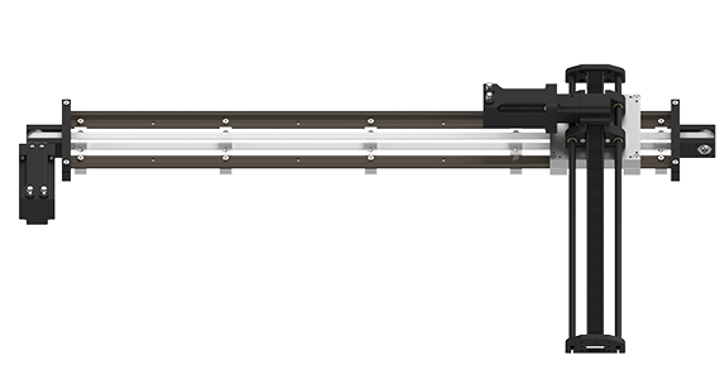
YZ Gantry
A YZ gantry incorporates two axes: Y and Z. This configuration supports applications requiring vertical motion in relation to the working plane along with horizontal travel. A common example is a sorting system that removes defective parts from a conveyor belt. Our DLE‑LG‑0002 modular kit performs this.
XY Gantry Robots
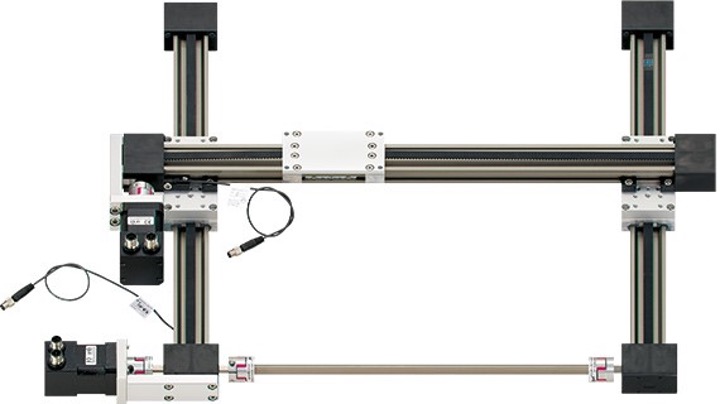
An XY gantry robot enables X‑Y motion across predefined surfaces and is suited to applications such as automated measurement and testing equipment. Our DLE‑FG‑0001 modular kit fulfills these requirements.
XYZ Gantry Robots
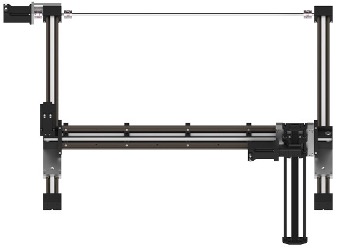
An XYZ gantry robot enables three‑dimensional motion. It is built on an XY gantry and extended with a cantilever axis, which allows travel in the X, Y, and Z directions. Our DLE‑RG‑0003 system provides this capability. A repeatability of approximately 0.5 mm is the upper limit for a three‑axis configuration.
Configuration, programming & accessories
Users can configure stroke lengths, motor technologies, cabling, and proximity switches. Programming does not demand deep IT expertise. The igus Robot Controller, including its software, is available free of charge. For users who require more flexibility, the D1 control system is an alternative. Energy chains can also be integrated when required.
Broad product range
igus linear technology encompasses one of our broadest product ranges. We offer solutions to almost any motion‑related challenge. At times, it feels as though our portfolio has become so extensive that even we ourselves do not even fully grasp its limits. From individual shafts and linear plain bearings to profiles, carriages, and driven axes that can be operated manually or by motor, all the way to multi‑axis kinematics and delta robots, we provide modular design systems that encourage innovation.
What’s in it for you?
Because our gantries run on dry-running plastic sliders, they provide a number of benefits to designers, such as low maintenance (no need for grease), cost-effectiveness, clean or hygienic operation, corrosion-resistance, and lightweight profiles.
Some typical applications include:
- Applying glue beads to assemblies
- Setting welding points
- Performing standard pick‑and‑place tasks
- Tool‑changer mechanisms on machine tools (although not for use in the machine bed itself)
- And many more
Conclusion
igus gantry systems provide an accessible path to automation by combining clear mechanical design with configurable components and straightforward control options. For many applications, this combination of durability, low maintenance, and cost‑effective performance makes igus gantries a practical choice for introducing reliable automation without unnecessary complexity.
Do you have questions? Please reach out to us by your preferred method of contact:
By phone at 1-800-965-2496, 8am to 5pm ET
By live chat (with trained technical reps) at www.igus.ca
By email at caordersna@igus.net
By contact form