Why Pivoting and Oscillating Oil Impregnated Bronze Bushings Fail — and How to Design Maintenance-Free Joints at Low RPM
By Shizu Yamaguchi
For too long, the necessity of grease in many bearing applications, particularly those involving low-speed pivoting and oscillation, has been accepted as “just part of the job.” We’re here to challenge that assumption. In fact, we suggest that we should eliminate the need for lubrication entirely, creating truly maintenance-free designs.
The misconception of sintered bronze in oscillating motion
Sintered bronze bushings were originally designed to prevent a constant need for maintenance.
Through a process called powder metallurgy, these bushings gain large porous walls. These pores are filled with lubricating liquid that is gradually released via high-speed continuous rotation (Blue Powder Metallurgy, 2026).
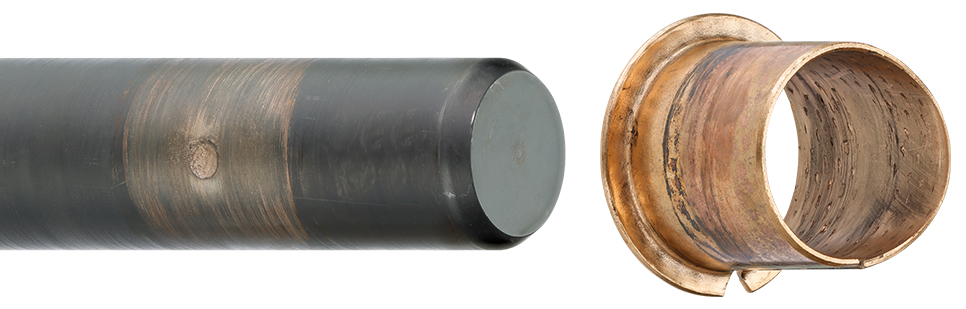
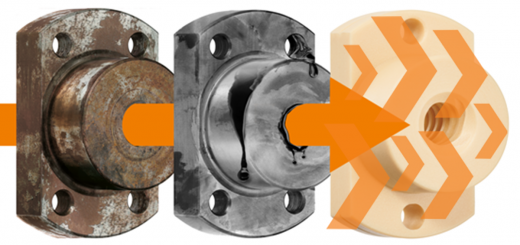
Unfortunately, without continuous rotational movement, the internal pockets of unused oil dry out over time. Maintenance staff manage this issue by regularly re-greasing their bronze bushings. And because oil impregnated bronze bushings are considered a staple in Canada, the idea of scheduled maintenance is viewed as the norm and not a problem.
However, oil-impregnated bronze faces significant challenges under conditions of oscillation and not full rotation. The microscopic movements and contact pressures at pivot points result in accelerated wear, friction, and heat, often seen as fretting corrosion or increased operational noise.
We can see that bronze bushings are only maintenance-free under certain conditions.
Why PV limits are misleading for oscillation
Most published PV (Pressure-Velocity) limits are derived from continuous rotation tests. These values become highly misleading in oscillating or start-stop scenarios. The intermittent nature of movement, the inability to establish a stable lubricant wedge, and micro-motion at the contact surface introduce wear mechanisms that simple PV values cannot capture.
What actually controls wear in these pivot points is a complex interplay of contact mechanics, micro-motion, shaft interaction, and the consistent presence (or absence) of effective lubrication.
The cost of masking inefficiency
Lubrication, in many cases, is a temporary buffer against an underlying structural mismatch between bearing material and its application’s motion physics.
This reliance on external lubrication also brings significant operational costs and vulnerabilities, particularly in Canada’s diverse climate. Consider outdoor automation: a bronze bushing that is dependent on grease becomes a major liability in extreme cold. Grease viscosity skyrockets, leading to increased friction, power consumption, and even seized components. More frequent re-greasing, winter-grade lubricants, or even localized heating become necessary—all adding complexity, cost, and maintenance downtime.
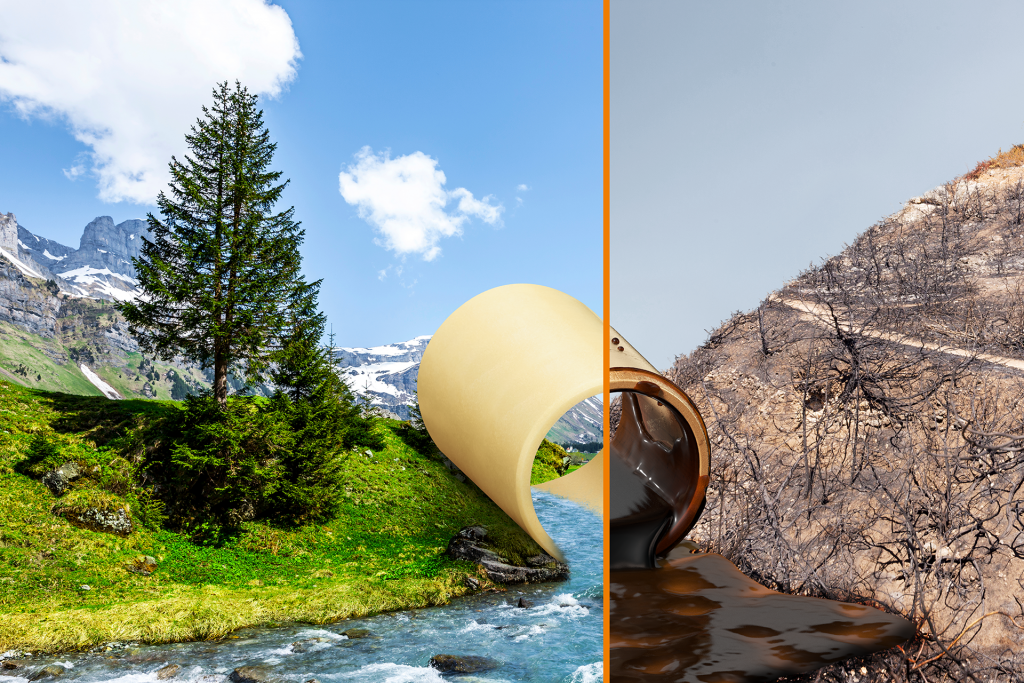
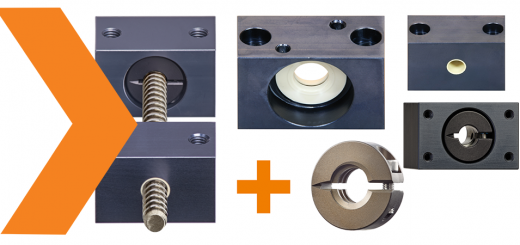
The path to true maintenance-free design is in using engineered plastic bearings. These bearings integrate solid lubricants, allowing them to run dry.
The benefits are manifold:
- Consistent lubrication prevents metal-on-plastic wear, even in the most challenging oscillating, pivoting, and start-stop applications.
- Performance remains stable across vast temperature ranges, from deep Canadian winters to hot summer operations, without concern for grease viscosity changes.
- Eliminating re-greasing translates directly to fewer service cycles, lower labour costs, and increased uptime.
- Engineered polymers are gentler on mating surfaces. They perform optimally with smoother shafts (typically Ra 0.2-0.4µm) and often permit the use of less expensive, unhardened shaft materials, as the bearing itself is designed to absorb wear. This allows engineers to optimize the entire joint for longevity and cost-effectiveness.
- These materials also offer advantages like lighter weight, corrosion resistance, and vibration dampening, contributing to quieter, more efficient machine operation.
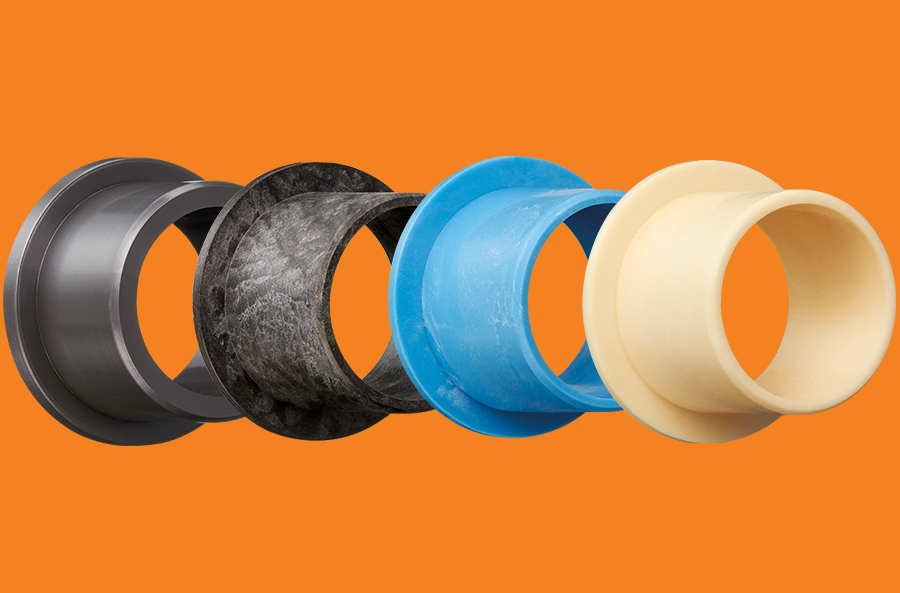
A call for re-evaluation
If your current designs are plagued by persistent lubrication issues, accelerated wear in pivot points, or operational challenges due to environmental conditions, it’s time to explore what modern engineered polymer bearings can offer.
Let’s discuss your specific application challenges. Reach out for an application-specific consultation, and together we can engineer more reliable, maintenance-free solutions for your next project.
Reference
“What are Sintered Bronze Bushing?” Blue Powder Metallurgy, 2026, https://powdermetallurgy.com/oil-impregnated-bronze-bushings/.