Understanding the Impact of Salt and Sugar Contamination on Linear Motion Systems
By Marco Thull (Edited by Shizu Yamaguchi)
Food and beverage processing, filling, and packaging environments regularly expose machine components to contamination. For a design engineer, the challenge is not simply whether a component continues to move, but whether it does so predictably, cleanly, and without creating unexpected maintenance requirements over time.
Salt and sugar are common contaminants in these environments. Both substances can create abrasive conditions that influence wear behavior, coefficients of friction, and long-term reliability expectations in linear motion systems. Understanding how these contaminants affect bearing and guide performance allows engineers to make informed material and design decisions that hold up after installation, without introducing service surprises later.
Test Approach Reflecting Real Operating Conditions
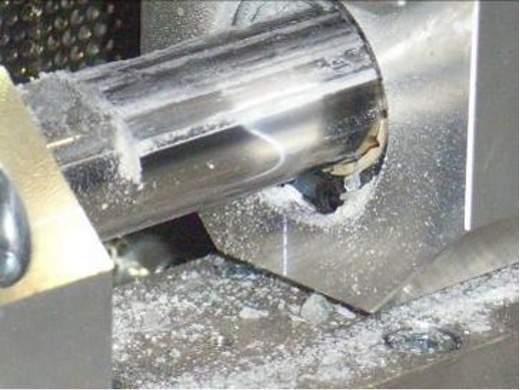
To examine the effects of salt and sugar contamination, our test laboratory simulated both conditions using a linear friction coefficient test rig.
For the sugar contamination test, a viscous sugar solution was applied to the shaft and allowed to dry completely before the test began. This process was repeated daily to represent recurring contamination, as can occur in typical food handling applications where sugar residue is allowed to dry on machine components.
For the salt contamination test, a saline solution was applied to the shaft and the test was started immediately. Allowing the salt solution to dry before restarting did not result in a statistically significant contamination effect. As a result, contamination was reapplied twice daily to reflect conditions where salt remains active during operation.
All tests were conducted using JUM‑01‑20 plain bearings at a sliding speed of 0.15 meters per second under a 100‑newton load. The bearings were tested on both X105 stainless steel shafts and aluminum shafts.
What the Results Mean for Component Selection
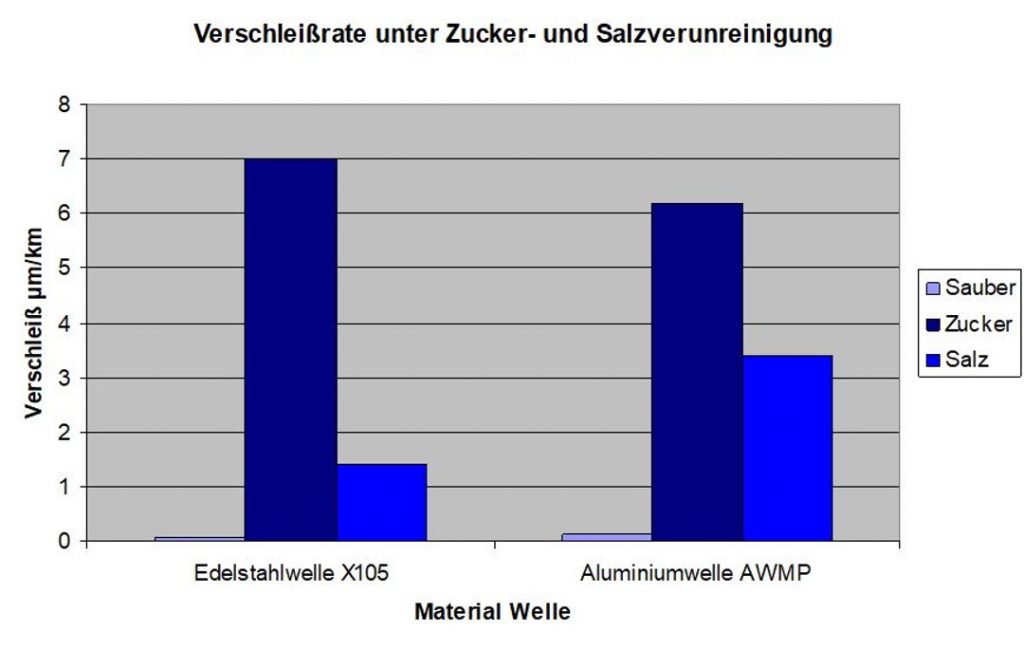
Test results showed that drylin® R linear guides continued to function on both X105 stainless steel and aluminum shafts under sugar and salt contamination. This confirms that the system is capable of operating under common food industry contaminants and does so without external lubricants, avoiding grease as an additional contamination source.
At the same time, test data showed that bearing wear and coefficients of friction were higher than those observed under clean ambient conditions. This distinction is critical for design engineers: while the system remains functional, contamination directly affects wear behavior and therefore influences service life expectations.
Understanding this relationship early in the design phase allows engineers to balance space constraints, material selection, and maintenance planning without relying on assumptions about contamination resistance.
Design and Maintenance Implications
drylin linear guides are designed for greaseless, clean operation, which removes a common source of contamination and reduces maintenance complexity in food and beverage machinery. However, testing under salt and sugar exposure clearly shows that regular cleaning of the application is recommended to keep wear behavior predictable and to support longer service life of the components used.
In practical terms, this enables engineers to design compact, low‑maintenance systems with confidence, while maintaining control over long‑term performance through straightforward, non‑intrusive cleaning practices. When properly applied, these systems support machine designs where reliability is achieved not by ongoing adjustment, but by informed material choice and clear maintenance expectations.
What’s Next?