Can Car Parts Be 3D Printed?
As technology advances, so do the capabilities of industries such as manufacturing and engineering. 3D printing is a popular talking point, and for good reason. It allows more complex designs to become a reality, including designs that traditional manufacturing processes were not capable of producing.
3D printing can be beneficial across a variety of industries, but one area that is not often discussed is the automotive sector. This blog looks at how both modern and vintage vehicles can benefit from 3D printing.
The Advantages of 3D Printing
There are many benefits to 3D printing parts, from faster prototyping to higher-quality products. 3D printing enables quicker testing cycles and more precise designs. Not only does this save time, but it can also reduce costs over the long term.
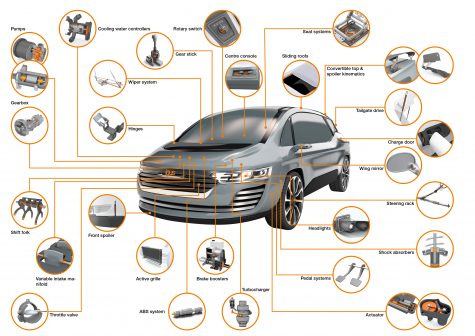
igus® high-performance plastics are corrosion-resistant and lubrication-free. Their long service life makes them reliable components that offer technical advantages at lower costs. From adjustable seats to plain bearings in coolant pumps, igus® products can help support automotive manufacturing applications.
Vintage Vehicle Parts
An interesting and niche application for 3D printing is in vintage vehicles. A recent visit with a member of the Federation of British Historic Vehicle Clubs was the perfect opportunity to demonstrate what igus® can offer in this area.
For particularly old and rare vehicles, sourcing replacement parts in good condition is becoming increasingly difficult. 3D printing these sought-after parts can provide an exact replica that is easy to produce and cost-effective. At igus®, iglidur® i6 laser sintering material is one of the most wear-resistant materials available.
Problem Solved
In the Stewart Warner speedometer, the gear on the first intermediate shaft, which meshes with the worm on the input shaft, was no longer functioning correctly. Due to previous work carried out on the speedometer, it was impossible to determine the correct dimensions, so a replacement worm gear was required that would be durable, precise, and cost-effective.
Using the igus® 3D printing service, a fully functional replacement part was produced from iglidur® i6. In addition, the use of self-lubricating polymers meant that the component no longer required lubrication. Even after more than 2,000 miles of use, no signs of wear were detected.
Disadvantages of 3D Printing
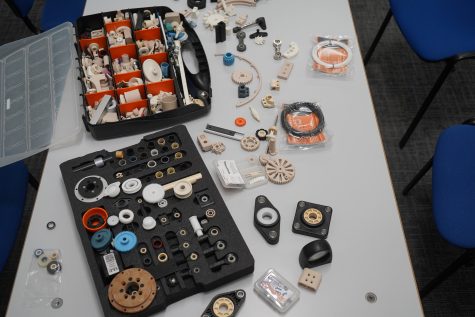
Despite being an innovative approach to manufacturing, 3D printers can consume a significant amount of energy, and the initial investment required to purchase these machines can be considerable. igus® can help overcome challenges such as cost or limited technical expertise by printing parts for you quickly and cost-effectively. Alternatively, we can recommend the right materials based on your requirements, allowing you to print the components yourself.
If you require high-volume production, 3D printing may not be the ideal solution, as it is generally best suited for low- to mid-volume production runs.
However, the advantages often outweigh these drawbacks, and investing in 3D printing technology is widely considered worthwhile. The possibilities it offers expand the boundaries of manufacturing, enabling innovative solutions that were once out of reach.
To learn more about 3D printing or develop your expertise in this field, contact us for specialist advice and discover where igus® solutions could be implemented within your business or projects.
Different Types of 3D Printing Technologies
As FutureLearn explains, there are several types of 3D printing technologies. At igus®, we can provide parts using the following three methods:
igus® Elsewhere in Automotive
igus® doesn’t just provide 3D-printed parts for vintage vehicles. We also support applications in modern vehicles. This video highlights additional areas where igus® products can improve movement, in this case through the use of ball bearings.