Articulated bus and streetcar joints: Where motion, wear, and noise collide
Thorsten Mersch (Edited by Shizu Yamaguchi)
Anyone who has traveled on an older articulated bus or articulated streetcar has experienced the mechanical movements and loads concentrated at the transition area. Squeaking and creaking are common, noises that can pierce through even noise-cancelling headphones, and that often reflect the high level of mechanical stress acting on the joint.
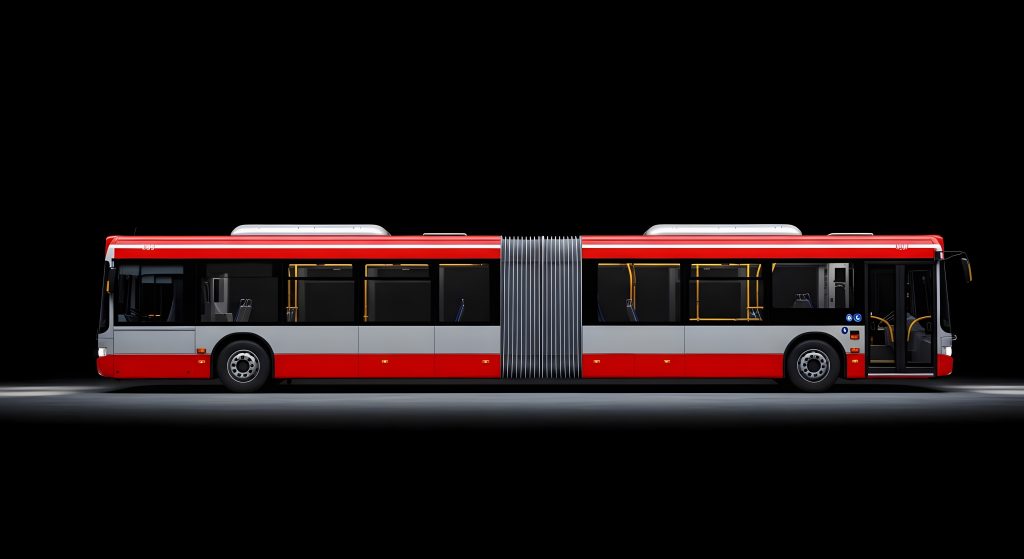
Over many years of operation, articulated joints are stressed by repeated vibrations and constant directional changes. As a result, the required components must withstand up to 1,000,000 cycles while remaining functional. Edge loads in the transition area place additional demands on the joint components.
The floor area of articulated transitions is exposed to extreme dirt and dust loads. Grit, sand, and other debris are carried in by passengers and accumulate in the transition area, contributing to wear.
Wear-resistant components used in articulated floor systems
Plain bearings and thrust washers are used in articulated floor systems to meet service life requirements under high edge loads. These parts also have the benefit of being dirt- and dust-resistant, in addition to being dry-running, removing the need for messy grease application during maintenance. Guide rails are used in flexible side walls to accommodate stroke movements. Protective liners shield bellows from chafing, and extruded sliding plates with a low coefficient of friction are installed in the floor systems.
Protection of electrical cables in transition zones
Electrical cables in the articulated transition area must be sufficiently protected against wear. Cable carriers are commonly used in ceiling areas of standard‑gauge rail vehicles. This prevents the cables from sagging while allowing flexibility in all directions.
Conclusion
Articulated transition areas expose components to extreme mechanical loads, vibration, and contamination. Wear‑resistant parts must be selected to meet long cycle life requirements under high stress conditions.
What’s next?
Learn more by exploring our site at www.igus.ca or visiting our blog & toolbox at blog.igus.ca. You are welcome to give us a call at 1-800-965-2496 or to start a live chat with one of our trained inside sales reps at www.igus.ca.